

%201.svg)
What’s on this page
Learn the basics of PCI DSS compliance and payment security for small businesses. A clear, beginner-friendly guide to protecting cardholder data.
Introduction
If your business accepts, transmits, or stores payment card information, you must understand the Payment Card Industry Data Security Standard (PCI DSS). This blog post breaks down what PCI DSS is and why it matters, especially for small and growing businesses.
What Is PCI DSS?
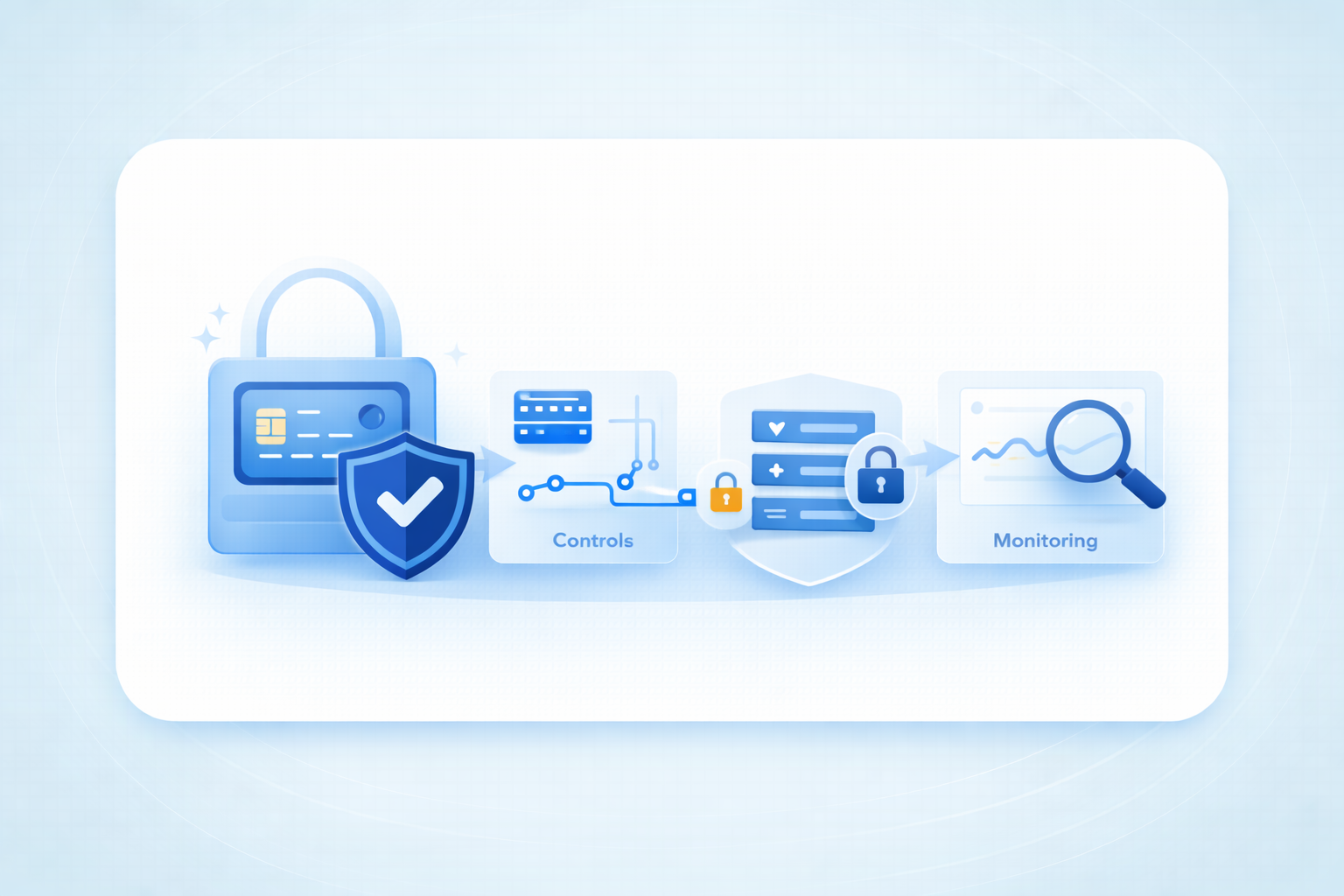
PCI DSS is a set of security requirements designed to protect payment card data. It was created by the Payment Card Industry Security Standards Council (PCI SSC) and applies to any organization that processes debit or credit card transactions. The standard sets out controls covering areas such as:
- Network security
- Encryption
- Access restrictions
- Monitoring and logging
Who Must Comply
Any business that accepts card payments — whether online, in-person, or by phone — must meet PCI DSS requirements. Compliance levels vary based on transaction volume, but all merchants share the same core goals: secure cardholder data and prevent fraud.
Why PCI DSS Matters
- Protects Customers: Cardholder data is a prime target for attackers. PCI DSS controls reduce risk.
- Avoids Fines and Penalties: Non-compliance can result in financial penalties, loss of merchant privileges, and reputational harm.
- Builds Confidence: Customers feel safer when they know payment data is protected.
Core Requirements at a Glance
PCI DSS organizes its controls into 12 high-level requirements, including:
- Install and maintain firewalls
- Encrypt cardholder data
- Maintain secure systems
- Restrict access
- Monitor and test networks
These core areas help organizations build a baseline security posture.
Practical Takeaways
Even if you’re a small retailer or local service provider, PCI DSS compliance protects your business and customers. Start by identifying where cardholder data enters your systems and apply the required controls consistently.